
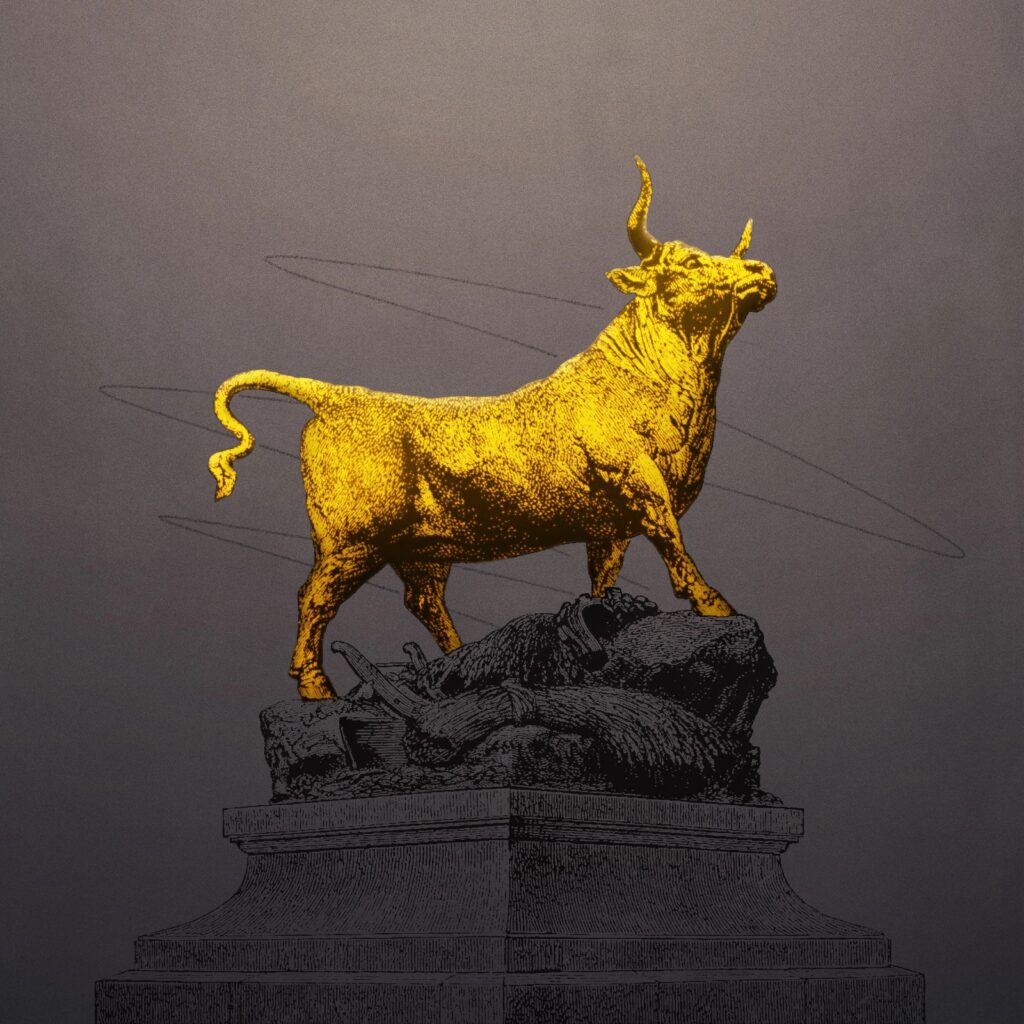
How modern hearts build inner temples, how those temples become liturgies of bondage, and how Christ alone dismantles and restores them.
“Son of man, these men have taken their idols into their hearts, and set the stumbling block of their iniquity before their faces.” — Ezekiel 14:3
Idolatry is not just an ancient problem of carved images and pagan temples; it is a perennial disease of the human heart. As John Calvin observed, ‘The human heart is a perpetual factory of idols.’ [1]
When we hear the word idolatry, most of us picture shrines with candles or statues in distant history. But in reality idolatry quietly builds inside us — in our imaginations, desires, routines, and private worship. It erects altars, composes liturgies, trains our nervous systems, and governs our wills. It looks modern, private, and internal — and therefore deceptively safe.
This article maps the anatomy of idolatry so you can: (1) recognize how it forms, (2) identify the ways it dresses itself up, and (3) walk it into the light of Christ so that the heart can be reclaimed and reformed. Throughout, we use the imagery of temples, liturgies, and altars not as creative embellishments, but because Scripture itself describes idolatry as embodied worship.
What Idolatry Is
Idolatry is the act of giving to anything—whether a carved image, created thing, inward desire, or imagined god—the worship, trust, fear, love, and allegiance that belong to the true and living God alone. Scripture introduces idolatry in its most visible form: the crafting and bowing down to physical images (Ex. 20:3–5). Yet the prophets make clear that the external idol is only the symptom of a deeper reality: “these men have taken their idols into their hearts” (Ezek. 14:3). The New Testament extends this further by naming greed, lust, gluttony, and covetousness as forms of idolatry (Col. 3:5; Phil. 3:19), showing that the essence of idolatry is not the object’s material form but the heart’s misdirected worship.
For this reason, the great theologians spoke of idolatry as fundamentally inward. Augustine described it as “disordered love” [2]. Idolatry happens whenever something becomes ultimate—when our hearts turn to a person, practice, object, habit, fantasy, or desire for identity, comfort, meaning, control, or salvation instead of Christ. In short: idolatry is misplaced worship, the heart’s exchange of God for anything less than God (Rom. 1:25).
Three essentials:
- It promises what only God can give (identity, significance, wholeness, safety).
- It commands regular worship (rituals, repetitions, private rites).
- It reshapes the will — you begin to live for it, hide for it, defend it, and organize life around it.
Idolatry is not merely a set of false ideas; it is worship. It constructs a liturgy — a repeated pattern of approach, offering, and reception — and slowly trains the body and imagination to bow. Scripture consistently reveals this: Israel built an altar before the golden calf, reenacting a counterfeit “mass” of feasting and frenzy (Exod. 32:1–6); the prophets of Baal danced around their altar in a scripted cycle of chants, cuts, and cries (1 Kings 18:26–29); Solomon’s slow drift into the high places followed the daily liturgy of his wives (1 Kings 11:1–8); and Babylon in Revelation seduces the nations through a civilization-wide ritual of luxury and lust (Rev. 18:3–7).
Every form of idolatry follows the same architecture. It creates an altar, a favored location (physical or mental) where the ritual occurs — whether the valley of Topheth for Molech (Jer. 7:31), a Roman temple to Caesar (Acts 19:26), a medieval brothel, or the illuminated screen in the digital age. It forms a script, a patterned sequence from cue to ritual to climax to dismissal — leading to a shame/comfort loop, just as the worshipers of Baal repeated their frenzy for hours (1 Kings 18:28) or modern sexual rituals follow predictable neurological grooves.
The Liturgy
Idolatry establishes a priesthood, the voices and rationalizations that justify and sustain the practice — Aaron before the calf (Exod. 32:21–24), Jezebel’s prophets (1 Kings 18:4, 13), imperial priests in Rome (Acts 17:16–31), or the whispering internal narrators that legitimize secret sin.
It stores a treasury, the rewards and reinforcements that keep the worshiper returning: the gold of idol temples (Exod. 32:4), the political favor of kings (1 Kings 21:7–16), the false security of Molech’s promises (Lev. 18:21), or the dopamine-driven pseudo-intimacy of pornography.
And it erects a watchtower, the gatekeeping secrecy that shields the idol from exposure — whether Jezebel slaughtering the Lord’s prophets (1 Kings 18:4), Babylon intoxicating nations into blindness (Rev. 17:2, 5), or modern isolation behind headphones and closed doors.
In every age, idolatry functions like a private religion: it has temples (habits), rites (rituals), theology (promises about identity, safety, or pleasure), and sacraments (experiences that feel like wholeness but deliver bondage).
“Therefore God gave them up in the lusts of their hearts to impurity, to the dishonoring of their bodies among themselves, because they exchanged the truth about God for a lie and worshiped and served the creature rather than the Creator, who is blessed forever! Amen.” — Romans 1:24-25
Idolatry doesn’t usually appear all at once; it is built step by step. It often starts with a deep need or hurt — shame, loss, unmet desire, or confusion about who we are (Jer. 2:13). Then we discover something that seems to fill that gap — a person, an activity, or an object that promises comfort (Exod. 32:1–4). Repeating this brings habit, linking the pleasure to the thing itself (1 Kings 18:28–29), and it takes on special meaning as a source of safety, identity, or control. Hidden practice and secrecy make us more attached and dependent.
Over time, the idol becomes part of who we are, shaping our desires and decisions (Ps. 115:4–8), while society, technology, or culture can strengthen its hold (Rev. 18:3). In the end, it becomes a false god, taking the place of the one true God.
“You shall have no other gods before me.” — Exodus 20:3
The Pantheon
Modern idolatry wears many faces. Some idols are public and celebrated, while others are deeply private and hidden.
We see image-idols in the curated self, online personas, and the pursuit of status, much like Saul’s obsession with public approval or the Pharisees who lived “to be seen” by others.
Pleasure-idols show up in habitual sexual gratification, pornography, food, substances, or thrill-seeking, echoing Israel’s revelry at the golden calf and the indulgent cultures of Corinth and Rome.
Control-idols emerge wherever power, influence, or the promise of managing chaos becomes the ultimate goal, reflecting Nebuchadnezzar’s demand for mastery and Herod’s fierce grip on authority.
Escape-idols appear in fantasy, dissociation, role-reversal, or compulsive media consumption, much like Israel longing to return to Egypt or ancient cults offering escape from ordinary life.
Approval-idols demand constant validation and affirmation, resembling Peter’s fear of public opinion or societies where honor determined worth.
Work-idols form when achievement and productivity replace worship, repeating the tower-builders of Babel or the performance-driven monastic spirit.
Relational idols arise when a friend or lover becomes our primary refuge instead of the Lord, echoing Samson’s fixation on Delilah or Solomon’s misplaced affections.
Ideological idols claim unquestioned authority over the conscience through political, cultural, or aesthetic visions, much like the Judaizers or zealots who sought salvation through a system or movement.
Though their forms differ, all these idols share one purpose: they aim ruthlessly to dethrone God.
The Lies
Idols always speak with seductive promises, but each of their lies is answered clearly by the gospel. They whisper, “This will make you whole,” yet Scripture teaches that only Christ makes us complete, and that wholeness is received, not seized (Col. 2:9–10).
They promise, “This will free you from responsibility,” but true freedom is found in the costly obedience of discipleship and the gentle yoke of Christ (Rom. 6; Matt. 11:28–30).
They claim, “Your shame can become glory,” while the gospel exposes our shame and replaces it with adoption, acceptance, and a new name (Rom. 8:1; Gal. 4:4–7).
They offer, “You can erase yourself and become someone else,” yet in Christ we are not erased but remade as new creations (2 Cor. 5:17). And they insist, “More intensity will finally satisfy,” while Scripture shows that lasting joy comes through covenant faithfulness and Sabbath rhythms, not escalation (Heb. 13:4; Gen. 2:2–3).
Each lie collapses before the truth: only God gives what idols pretend to offer.
A helpful way to discern whether something has become an idol is to ask a few simple questions:
- Do I regularly turn to this thing when I feel afraid, empty, or even joyful?
- Does it have a hidden or secret place in my life that I don’t want others to see?
- Do I find myself defending it or making excuses instead of confessing it honestly?
- Does it shape how I see myself or what I’m willing to do?
- Does it cost me spiritually, relationally, morally, or physically?
- And do I keep returning to it even after telling myself I won’t?
If several of these are true, it’s a strong sign that this thing has taken on the pattern and power of an idol.
The Warning
The Lord’s warnings against idolatry are fierce, purposeful, and unwavering. In Ezekiel, God reveals that idolatry is not merely a personal misstep; it is a defilement of His name and a threat to His covenant glory (Ezek. 14:3–7; 20:30–31). He exposes the hidden altars of the heart, tier by tier, calling out the secret loyalties and false trusts that masquerade as devotion. This divine exposure is merciful — a surgical illumination meant to turn His people from ruin and protect His name’s holiness.
God will not allow His glory to be paired with lies, deceit, or counterfeit worship; the consequences of ignoring this warning are both personal and public: shame, destruction, and a witness corrupted before neighbors and nations alike (Ezek. 9:6; Rom. 1:24–25). Idolatry offends God because it misrepresents His sovereignty, and He deals decisively with it, refining, rebuking, or removing what is false, all for the sake of His reputation and the redemption of His people.
For anyone who resists this refining work, the ramifications touch the soul, the household of God — a sobering reminder that the pursuit of counterfeit gods carries real ruin, while God’s corrective hand, though painful, is the path to life, restoration, and covenant faithfulness.
So I poured out my wrath upon them for the blood that they had shed in the land, for the idols with which they had defiled it. I scattered them among the nations, and they were dispersed through the countries. In accordance with their ways and their deeds I judged them. – Ezekiel 36:18-19
The Light
Idolatry is brought into the light through God’s gentle illumination and practical, Spirit-led steps. The first mercy is confession — exposing the hidden altar before a trusted pastor/elder, or mature believer, because secrecy loses its power when spoken in the presence of grace (James 5:16).
From there, we stop feeding the idol by removing access points, disrupting routines, and creating space where old rituals cannot thrive. But removal is not enough; the heart must be re-liturgized.
Gospel rhythms — Scripture, morning and evening prayer, Sabbath rest, a simple rule of life — begin to replace the sensory and emotional patterns that once supported sin.
Over time, the body and brain themselves are rewired through wise practices, counseling, and physical regulation when urges arise. Relationships harmed by idolatry are repaired through truth, repentance, and guidance, and a long-term plan of discipleship, community, discipline, and sometimes therapy anchors the new direction.
All of this rests on a final, essential plea: that God would give a new heart and new affections (Ezek. 36:25–27). Repentance is not self-reinvention — it is reliance on the God who raises the dead.
The Church
The local church is not optional; it is absolutely necessary for the Christian life. Scripture portrays the church as the visible body of Christ, the pillar and bulwark of truth (1 Tim. 3:15), a covenant community where faith is nourished, sin is confronted, and the gospel is faithfully proclaimed. To live apart from the local church is to abandon the safeguards God has placed around His people; the isolated believer is like a single match set adrift in the ocean — exposed, fragile, and prone to the currents of idolatry, deception, and self-deception.
Hebrews 10:24–25 commands us to “consider how to stir up one another to love and good works, not neglecting to meet together,” showing that spiritual growth is inseparable from mutual accountability and the shared worship of God’s people. Ephesians 4:11–16 depicts the church as the arena in which Christ equips the saints for service, builds up the body, and matures believers in faith.
Without this communal crucible, the heart’s tendencies toward idolatry—seeking identity, comfort, or control outside of God—remain unchecked. The local church is the God-ordained environment where confession, discipline, encouragement, and gospel-centered rhythms coalesce to protect, restore, and strengthen the believer, making it both the fortress and lifeline of the faithful.
The Christ
And this hope is secure because Christ Himself is the remedy for idolatry. Idols promise identity, safety, and worth, yet all they offer is a counterfeit of what God freely gives in the gospel. In Jesus Christ, God’s perfect Son obeyed the law flawlessly on our behalf (Phil. 2:8; Heb. 4:15), lived a life of perfect righteousness, and then took our place in death, bearing the penalty of our sins on the cross (2 Cor. 5:21; Isa. 53:5–6).
He was buried, and on the third day, He rose again in victory over sin, death, and every power of the enemy (1 Cor. 15:3–4; Rom. 6:9), securing justification for all who trust in Him.
Through this substitutionary atonement, shame no longer has legal power over you; adoption gives you a new name and a new family, ending the desperate chase for identity and approval (Rom. 8:1–4; Gal. 4:4–7).
Union with Christ turns the heart toward the true Bridegroom, reshaping what you love and long for (Eph. 5:25–27).
Sanctification then works slowly and steadily, transforming habits, desires, and even neural pathways by the Spirit’s power (Phil. 1:6; 2 Cor. 3:18).
The process has moments of decisive change and seasons of gradual formation — but its outcome is sure. God does not merely take idols away from His children; He gives Himself in their place. No sin, no history, no pattern is stronger than the grace offered in Jesus Christ. Where idols promise life, joy, and identity but deliver bondage, Christ perfectly fulfills all these needs, freely and fully.
Final Thoughts
Idolatry masquerades as a solution; it promises life but drags the heart into servitude. It will not yield easily because it has trained body and brain, hidden itself in secret, and often enjoys social or technological scaffolding. But the gospel meets idol-making at every level: it exposes, it renounces, it replaces, and it restores.
If you are in the middle of this work — fearful, relieved, ashamed, hopeful — know that what you now feel (grief, clarity, pressure, and a longing for repair) is precisely the pathway of grace. God is not shocked by your honesty. He is making His way through it. Keep bringing the false temple into the light and keep placing the stones of your inner life back on the foundation of Christ. What idols demand in blood and secrecy, Christ gives in grace and light.
Notes
[1] Calvin, Institutes of the Christian Religion, Book I, Chapter 11, Section 8.
[2] Augustine, On Christian Doctrine I.22–27

This excellent post… Idolatry is the act of giving to anything—whether a carved image, created thing, inward desire, or imagined god—the worship, trust, fear, love, and allegiance that belong to the true and living God alone.
This definition alone I find it intriguing that in our definitions of idolatry we often remove inward desires… But in actually sense the erecting of physical idols is a reflection of the inward desire gone world..